Fintech · SaaS · SEO
FactuPlanElectronic-invoicing platform for Ecuador's SRI
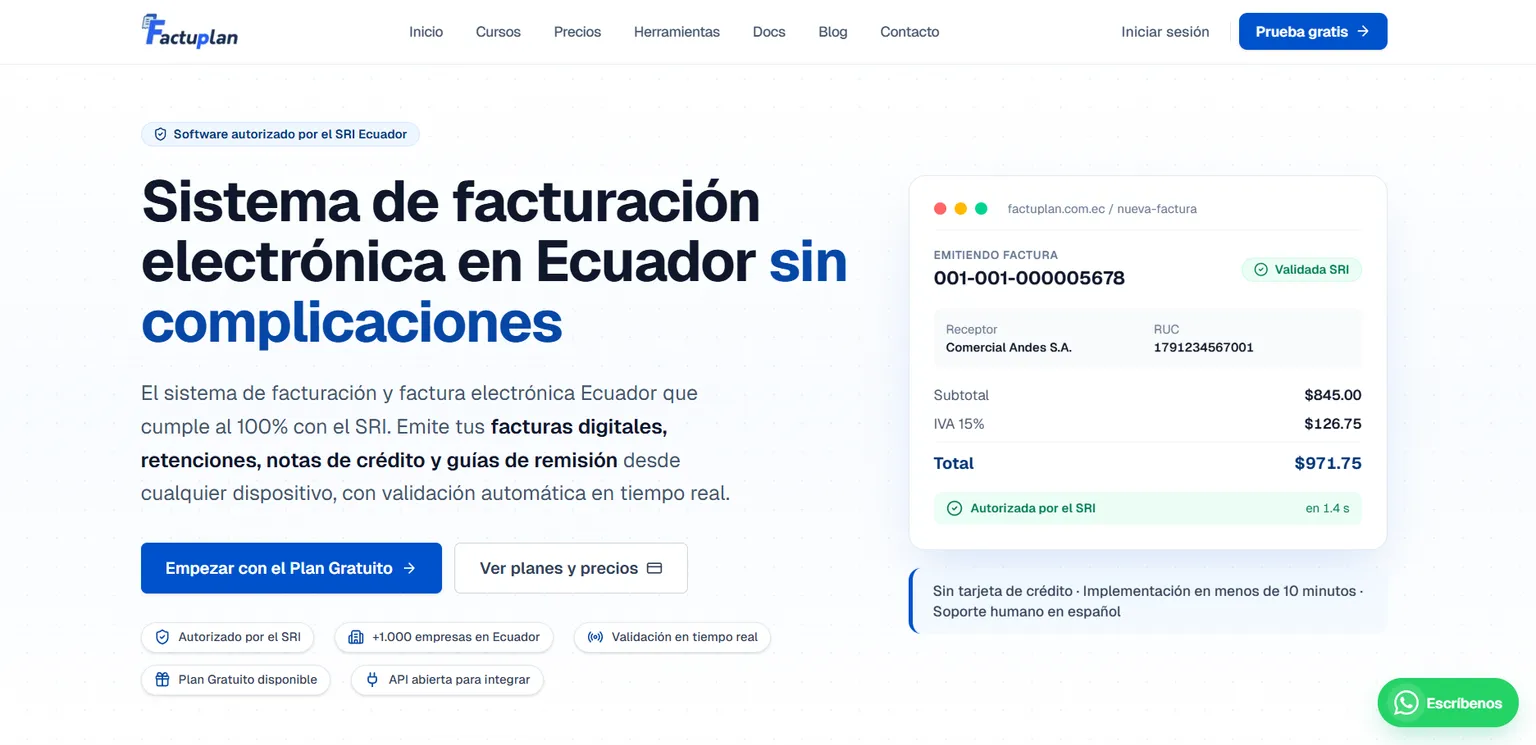
Multi-tenant SaaS platform for electronic invoicing against Ecuador's tax authority (SRI). I worked on the product frontend and on the whole site that sells it: blog, SEO structure, measurement in Google Analytics and Search Console, and the funnel that turns visits into customers.
Technologies
- Astro
- Next.js
- TypeScript
- Refine
- NestJS
- GraphQL
- PostgreSQL
- Clerk
- AWS S3
- Google Analytics 4
- Search Console
- JSON-LD
- Technical SEO
- UX/UI
85
blog articles
136
URLs in the sitemap
8
free tools
6
comparison pages
My role
Web & applications developer at Azirgo SAS. I worked on the panel frontend and, above all, on the public site: content and blog, SEO structure, UX/UI, measurement with Google Analytics and Search Console, and analysis of the acquisition funnel.
The problem
The hard part of an invoicing SaaS is not only issuing documents the SRI will accept: it is getting the businesses that need to invoice to the platform in the first place. The product already matched the spec, but the site brought in no search traffic of its own, there was no way to tell which pages earned impressions and clicks, and no way to separate a curious visitor from a business that would actually sign up.
What I built
- Frontend of the public site: product, plans, pricing and contact pages, with UX/UI aimed at reaching signup.
- An in-house blog on electronic invoicing, SRI obligations and taxpayer questions, as the organic entry point.
- The site's SEO structure: a page hierarchy by search intent, titles and descriptions, internal linking, sitemap and structured data.
- Measurement in Google Analytics 4 with custom events for every funnel step: visit, signup, plan selected and contact.
- Search Console tracking of clicks, impressions, CTR and position per query, to decide which content to expand, rewrite or merge.
- Frontend of the multi-tenant SaaS admin panel, with each company isolated inside the same platform.
- Microservices for generating the invoice PDFs, plus taxpayer lookup to validate details before issuing.
- A GraphQL API as the single data layer behind the panel, with documents stored on AWS S3.
The blog and content
The blog is the site's organic entry point: 85 published articles across five categories, written in MDX on a content collection with a validated schema. Every article comes out of the same template, so none ships without a table of contents, an FAQ or structured data.
- Categories: Guides (49), Legal & SRI (20), Software (14), Use cases (1) and News (1), each with its own page plus a category index.
- Topics go beyond invoicing: income tax, VAT, RUC, RIMPE and electronic signatures, plus integration guides in Node.js, PHP and TypeScript for developers.
- Article template: breadcrumbs, date, reading time and author, an “In this article” table of contents, an FAQ accordion, tags, share buttons and related posts.
- Calls to action: free-trial and buy-a-signature blocks and, after 10 seconds, a modal with the offer that matches the article's topic (invoicing plan, electronic signature or becoming an electronic-signature reseller).
- JSON-LD on all 85 articles (BlogPosting, BreadcrumbList and FAQPage, plus HowTo on 12), and a collection schema that validates title and description length, target keyword and category at build time.
- Pagefind search at /blog/buscar, an RSS feed and a dedicated blog sitemap with each article's last-modified date and image.
Tools, comparisons and documentation
Outside the blog, the site covers the searches that are not about reading: people who want to calculate something, compare providers or integrate the API. That is 44 URLs grouped by intent.
- 8 free tools under /herramientas: VAT, income-tax and savings calculators, a RUC validator, an access-key decoder, an invoice checker, a guide to downloading invoices from the SRI and an online PDF signer.
- 6 comparison pages: Factuplan against Contifico and Dátil, and alternatives to Contifico, its API, Dátil and Security Data.
- 10 search-intent pages: what a system costs, free invoicing, SRI invoicer, final consumer, SMEs, waybill, credit note and electronic signature.
- Pricing with 8 plans, from the free one to 1,000 documents a month, and a comparison table built at build time from the plans published in Factuplan's API.
- A developer area: pages for the REST API, the SRI API and the Postman collection, plus Starlight documentation (API and Node.js SDK) with its own search.
- A help centre with 22 questions across five topics and a courses section with a Factuplan course whose first lesson is already published.
Inside the site
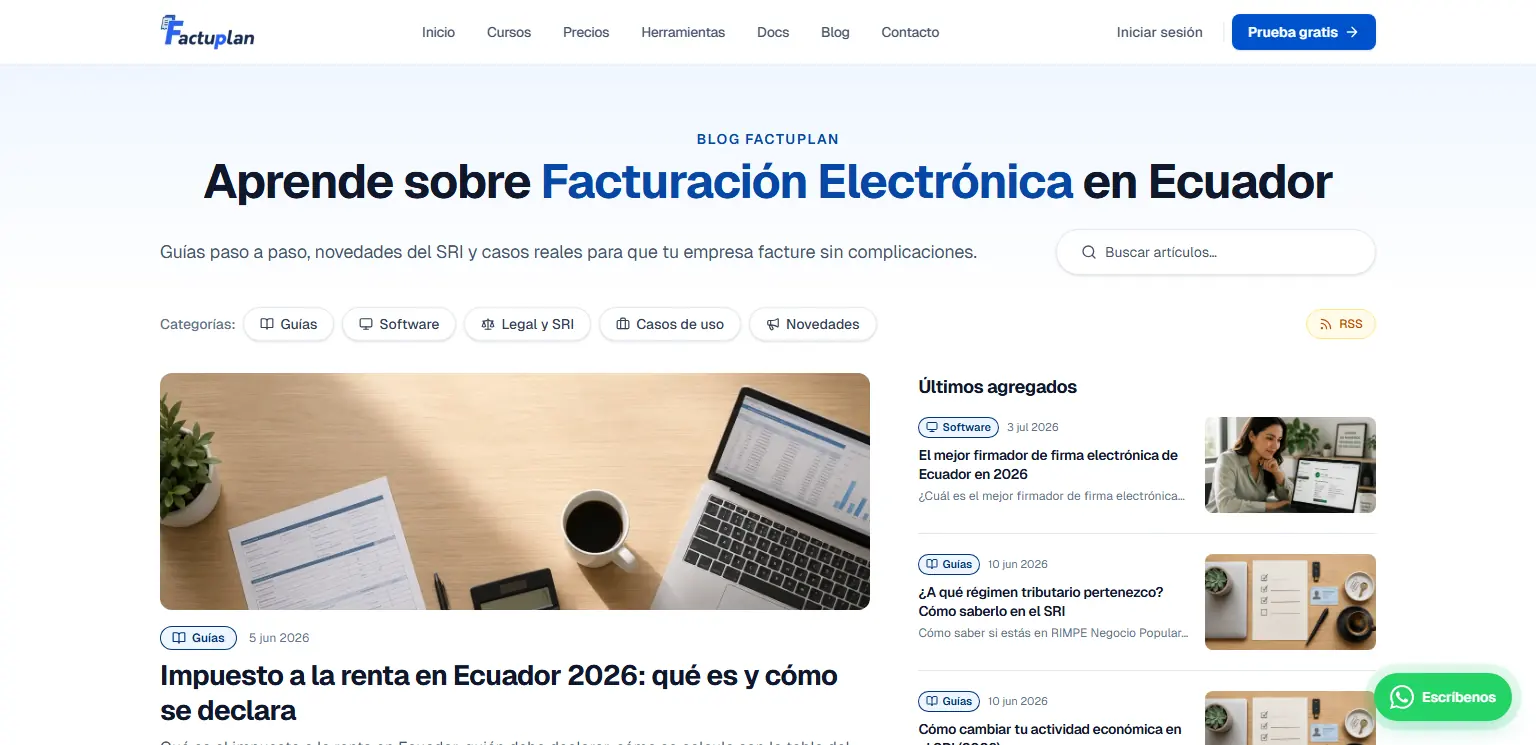
Blog index: search, five categories and the latest articles. 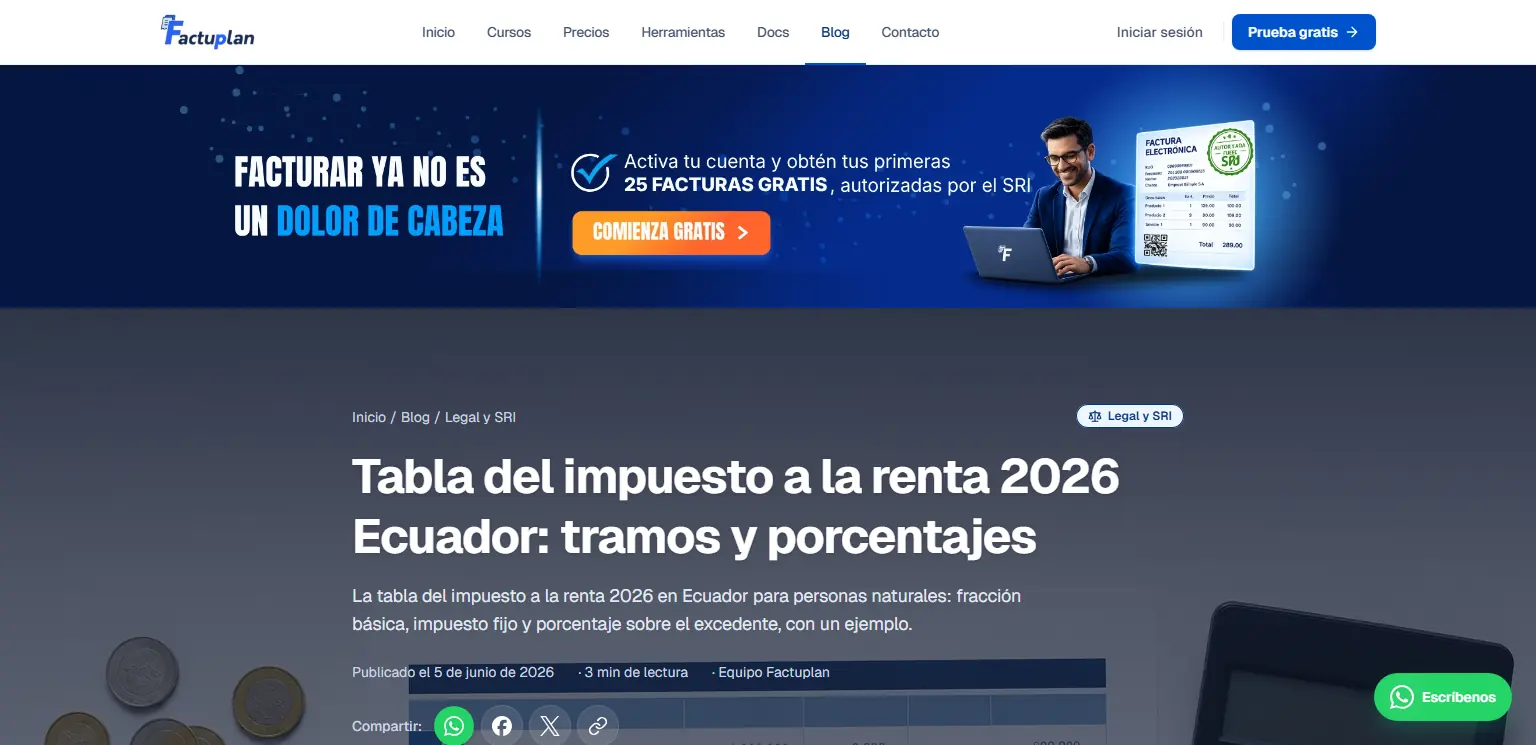
A Legal & SRI article with breadcrumbs, reading time and author. 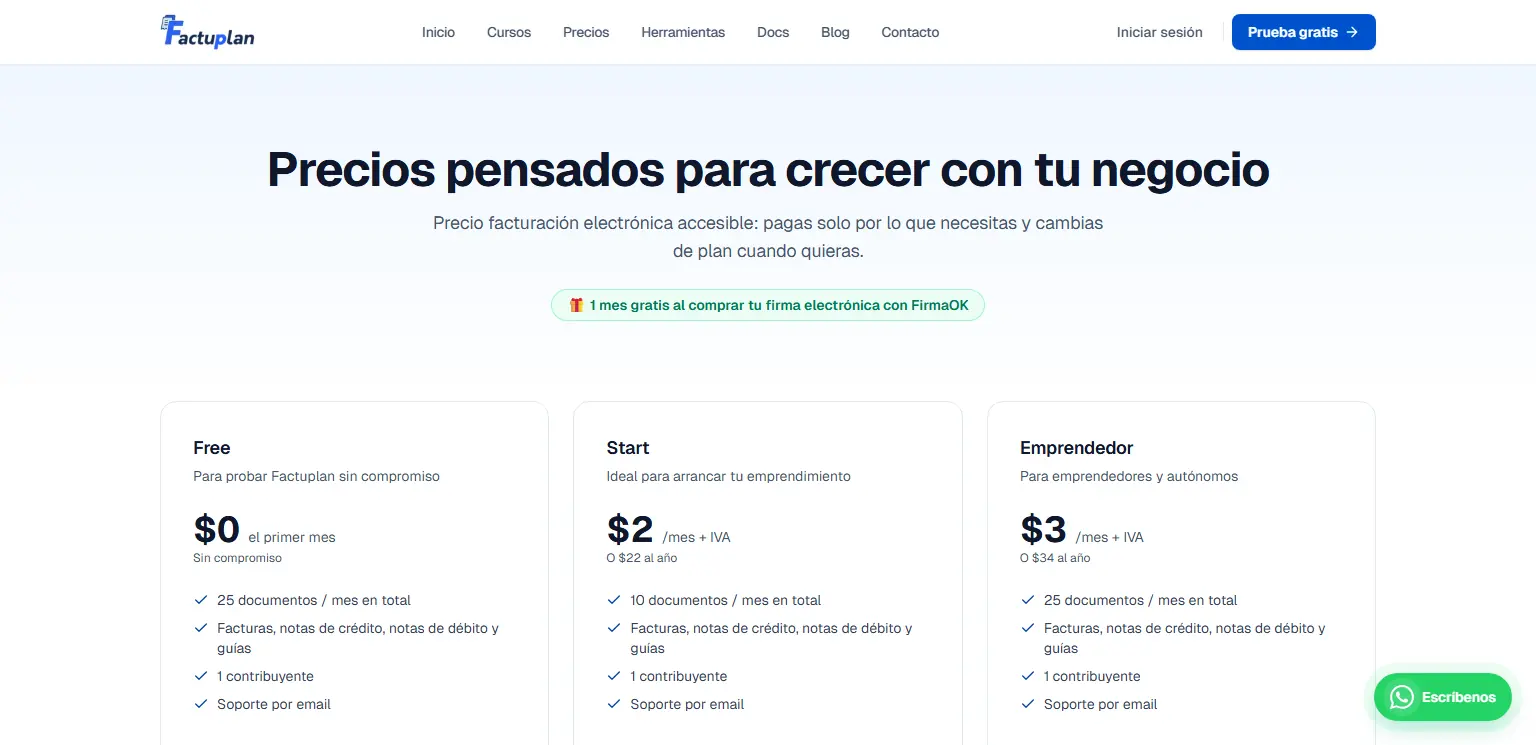
Pricing: eight plans, from the free one to 1,000 documents a month. 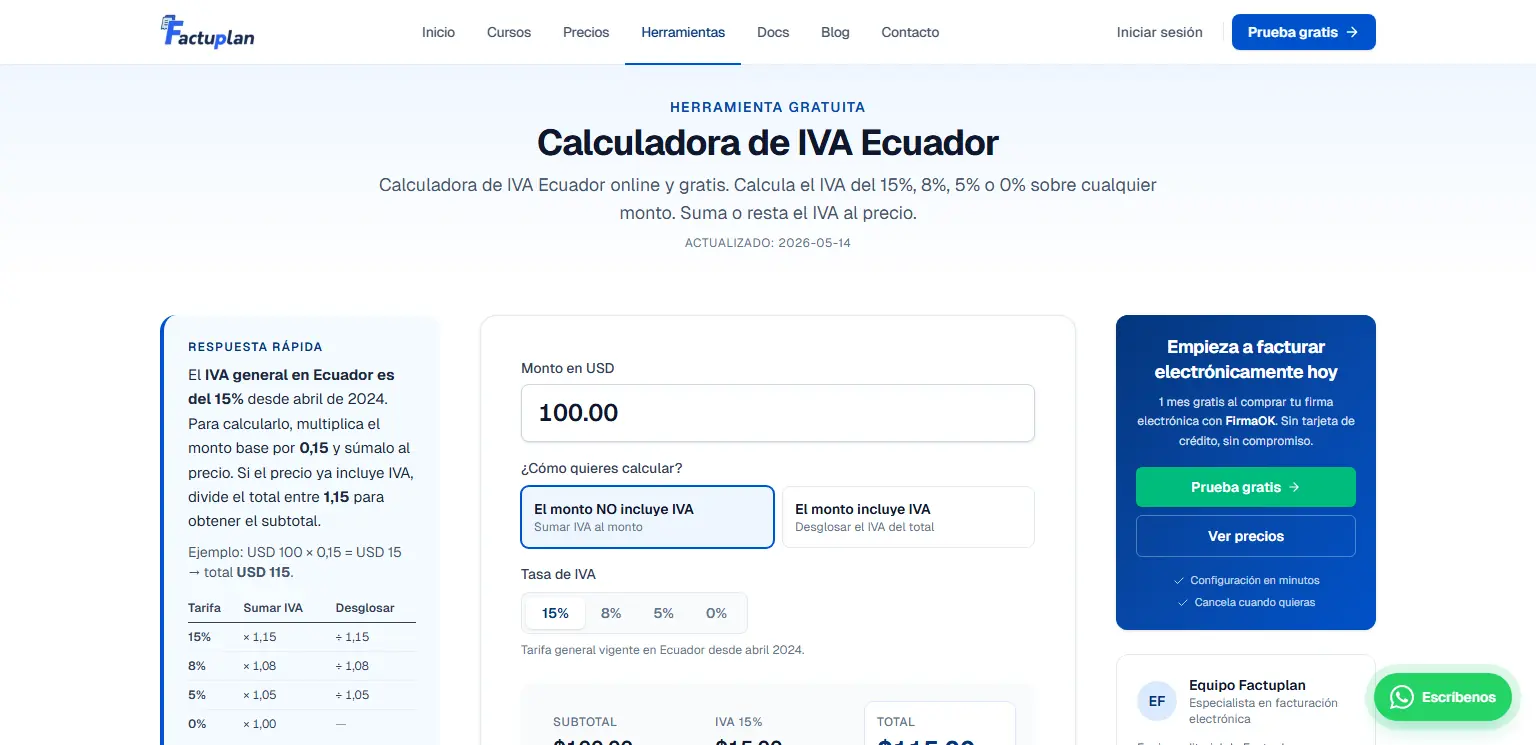
VAT calculator that adds or breaks out 15%, 8%, 5% or 0% of an amount.
Technical decisions
- Treat the site as part of the product rather than a brochure: every page exists to answer one real search and end in a signup.
- The blog goes after the taxpayer's actual questions (deadlines, document types, SRI rejection errors), because whoever searches for those is exactly who needs to invoice.
- Custom GA4 events instead of settling for pageviews: without one event per step you cannot see where the funnel drops.
- Search Console as the source of truth for demand: look first at which queries already earn impressions, then write the content.
- Astro with static output for the public site: blog, tools and commercial pages ship as crawlable HTML from the first deploy.
- PDF generation lives in its own microservice so a burst of invoices never blocks the main API.
Challenges
- Qualifying leads with what can actually be measured: telling an informational visit apart from a business that will sign up.
- Letting educational content and commercial pages coexist without cannibalising each other on the same searches.
- Keeping measurement consistent between the public site and the product, so the full funnel can be read end to end.
- The SRI document format leaves no room for approximation: the document either matches the spec or it is rejected.
Result
The platform is in production, with different companies issuing their invoices from the same panel, and the site works as its acquisition channel: blog and intent pages published and crawlable, the funnel instrumented in GA4, and per-query performance tracked in Search Console to decide what to write next.